
Environment
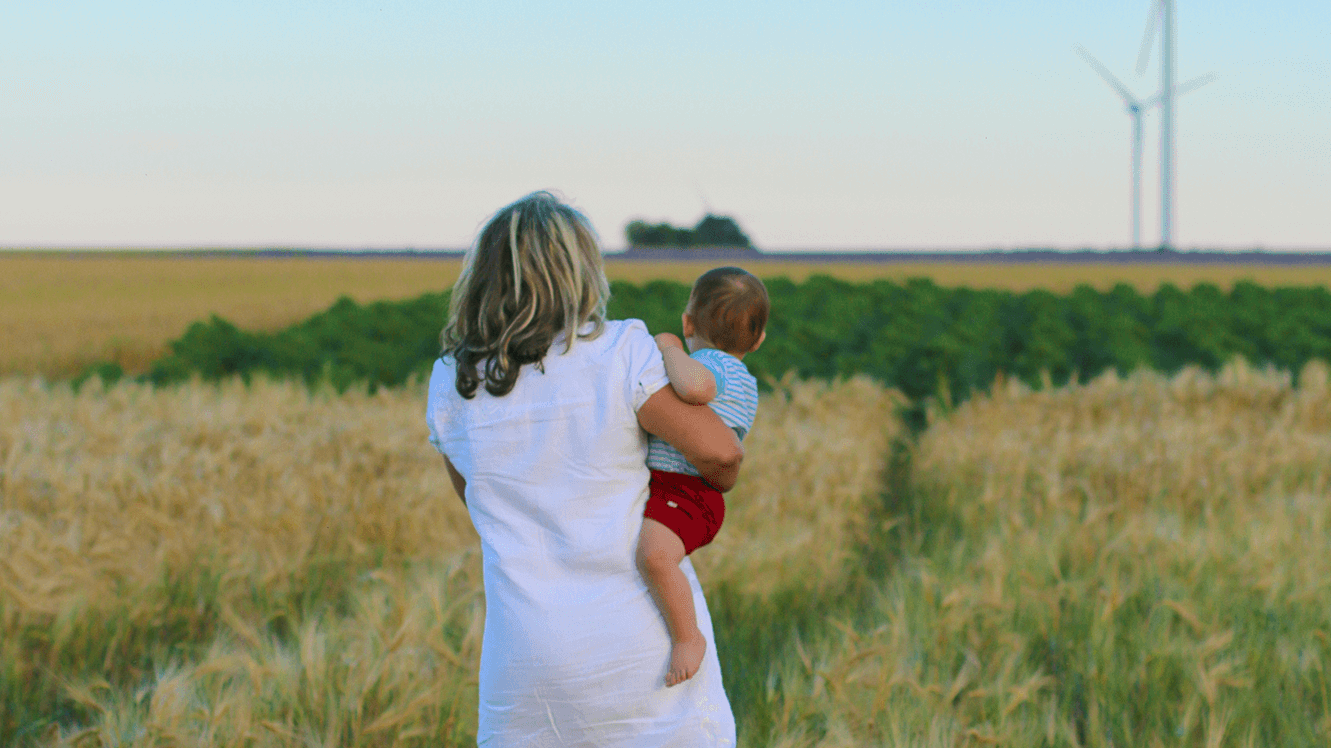
Our planet is a place worth preserving and protecting for the future.
BORSIG is therefore constantly developing and improving processes that reduce the impact on the environment and protect natural habitats.
Resources are the link between climate change, biodiversity, the environment and economic growth, but only if we also place our focus on resources will we be able to solve many of the challenges we currently face together.
But what does the future of natural resources look like?
The fact is, fossil fuels such as coal, oil and natural gas are still crucial for countless processes in the economy and supply around 80 % of the world’s energy, but they are also the main source of the greenhouse gas emissions we generate.
Even though mining and processing are becoming more and more efficient on the back of technological developments – the deposits are limited and will eventually be exhausted.
Have we sparked your interest?
If you care as much about the future as we do, get in touch. We look forward to talking to you.

![[Translate to Englisch:] ressources_clear_water [Translate to Englisch:] clear water lake nature](/fileadmin/mediamanager/Relaunch_2022/Fokusthemen/Ressourcen/ressources_water.png)
The future therefore lies in the development of new technologies in the use of resources. Conservation and recycling are commonly acknowledged as measures, but the reuse of substances already released – such as VOCs or CO2 – is equally crucial and offers a great deal of potential.
The challenges are huge, but there is a willingness to change. They exist, the initiatives and efforts of governments as well as companies that want to do their part and we at BORSIG definitely count ourselves among them.
Our engineers can and will contribute to this change with their knowledge and their drive for research to develop further solutions that ensure a better future for us all. We at BORSIG will therefore continue to follow the path we have already consistently trodden in recent years: to use existing resources as efficiently as possible and thus conserve them, to recover them and to preserve them more and more through the deployment of new technologies.
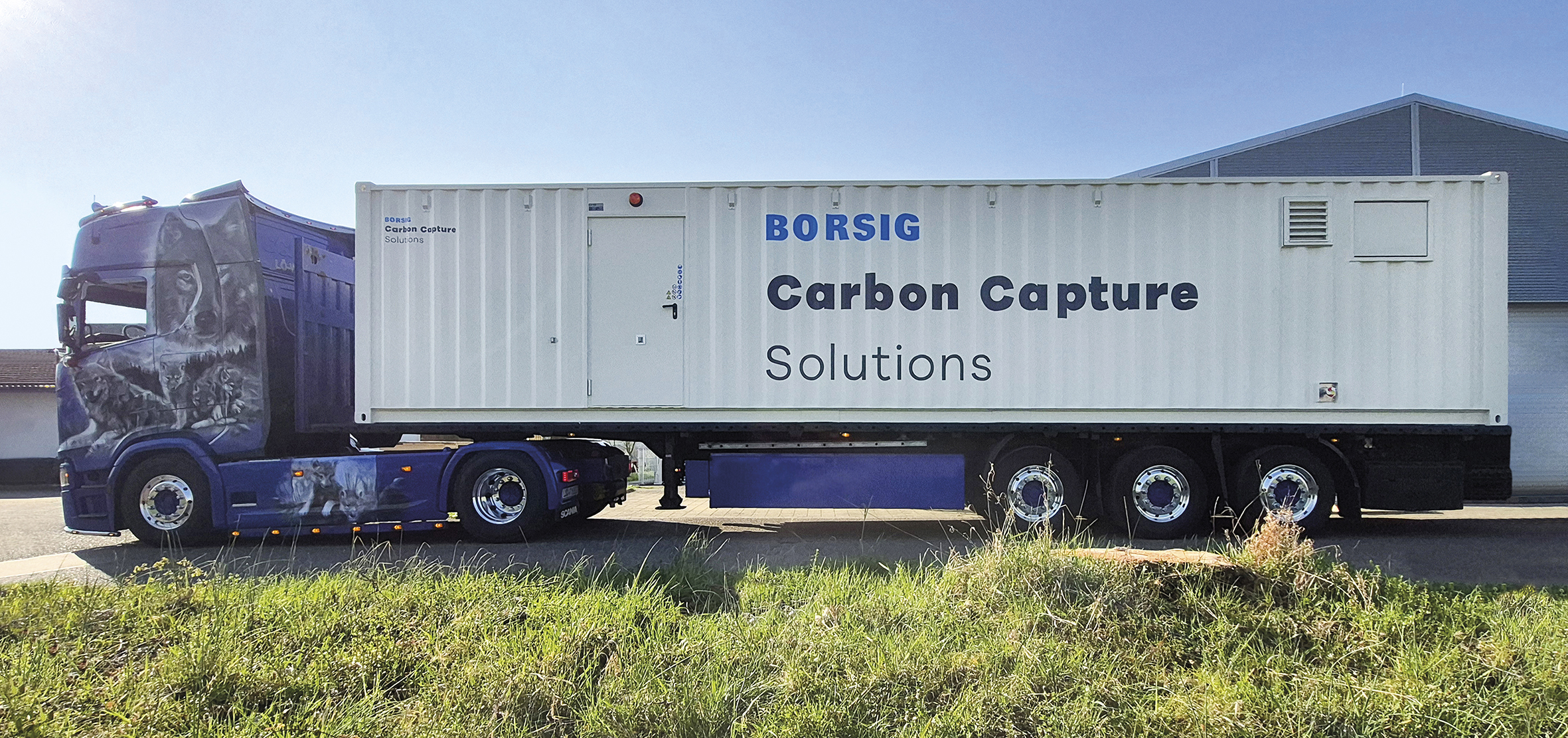
CO₂ is not only a greenhouse gas, but also a usable raw material. BORSIG makes it available with integrated carbon capture solutions: from CO₂ separation through compression to handover for transport, storage, or further use.

Climate targets, the energy transition, and increasing regulatory pressure require industrial, energy and process plants to significantly reduce their emissions.
Capturing CO₂ must be not only technically feasible but also economically viable.
At the same time, CO₂ that has already been released offers great potential as a feedstock for the chemical, fuel synthesis, e-fuels and building materials industries.
The waste gas or process gas stream is turned into a CO₂ product with the purity and compression required for storage or further use. To achieve this, we combine our many years of experience in membrane and compressor technology, and tailor each solution to the specific plant configuration and gas composition.
BORSIG develops a bespoke solution for every plant. The feasibility study is followed by basic and detail engineering, plant construction, and commissioning. Our engineers also take care of service, maintenance, and continuous process optimisation during operation. We already have references in the lime and cement industries, as well as in flue gas treatment and CO₂ storage.
In this way, BORSIG not only helps to reduce CO₂ emissions but also unlocks new value creation from CO₂, and relieves its customers of the burden of managing multiple suppliers by providing support from a single source.
Carbon capture refers to the separation of CO₂ from waste or process gas streams. The captured CO₂ is compressed and then transported, stored, or put to further use (CCUS).
By using highly selective gas separation membranes. They enable process solutions with CO₂ enrichment to over 90 vol.%. The systems are modular in design and can be retrofitted to existing plants.
For pipeline transport, storage or further processing, CO₂ must be available at the required level of compression. BORSIG uses integrally geared centrifugal compressors for this purpose, which are process-optimised for CCUS.
Fields of application include the chemical industry, fuel synthesis, e-fuels, and building materials production. Alternatively, the CO₂ can be stored.
![[Translate to Englisch:] CO2 Separation mit Membrantechnologie](/fileadmin/_processed_/f/e/csm_Carbon_capture_1_50931c122a.jpg)
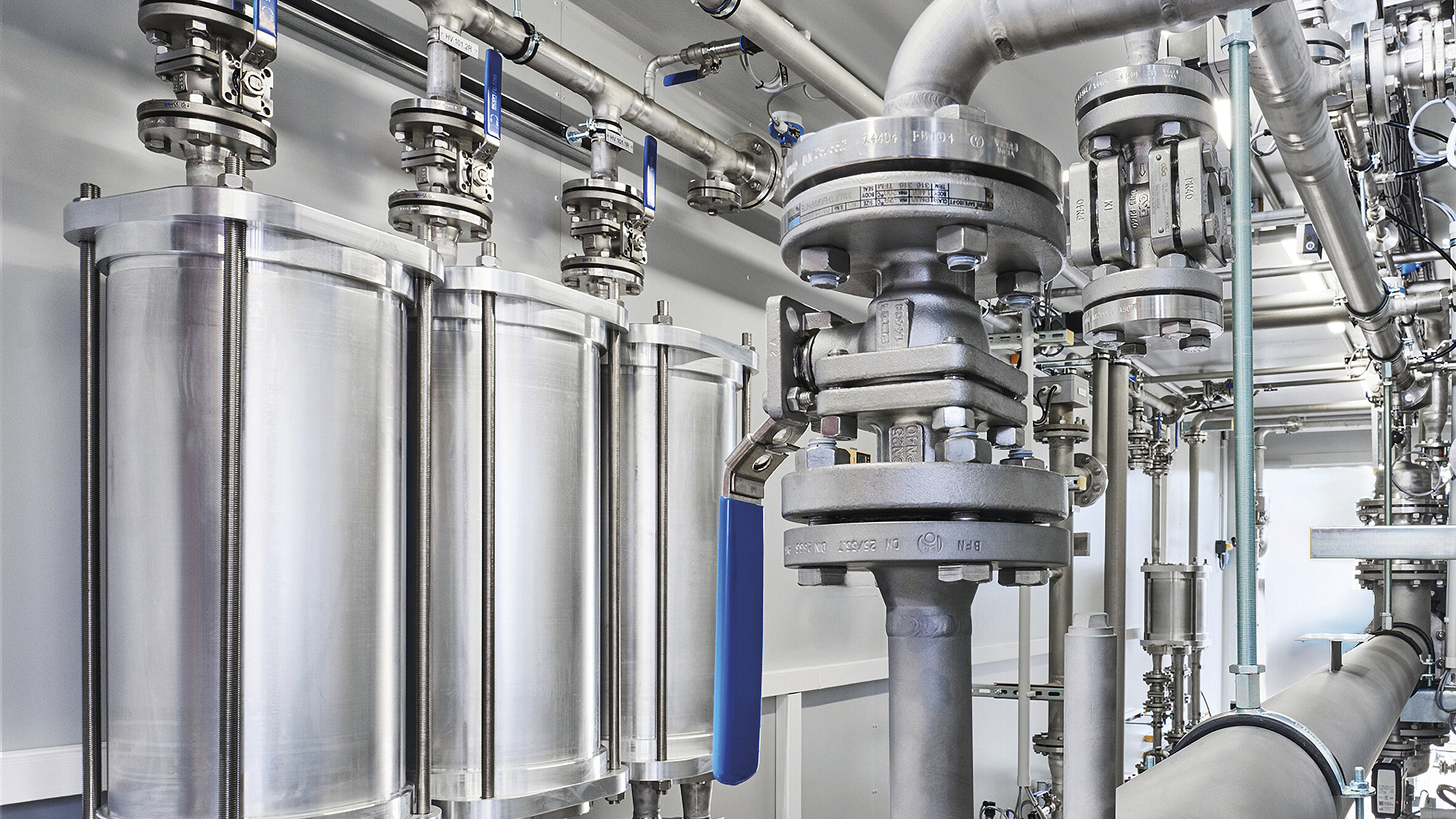
We offer energy-efficient separation and enrichment of CO2 from flue gases and process gases. Our units are modular in design and can be retrofitted to existing facilities.
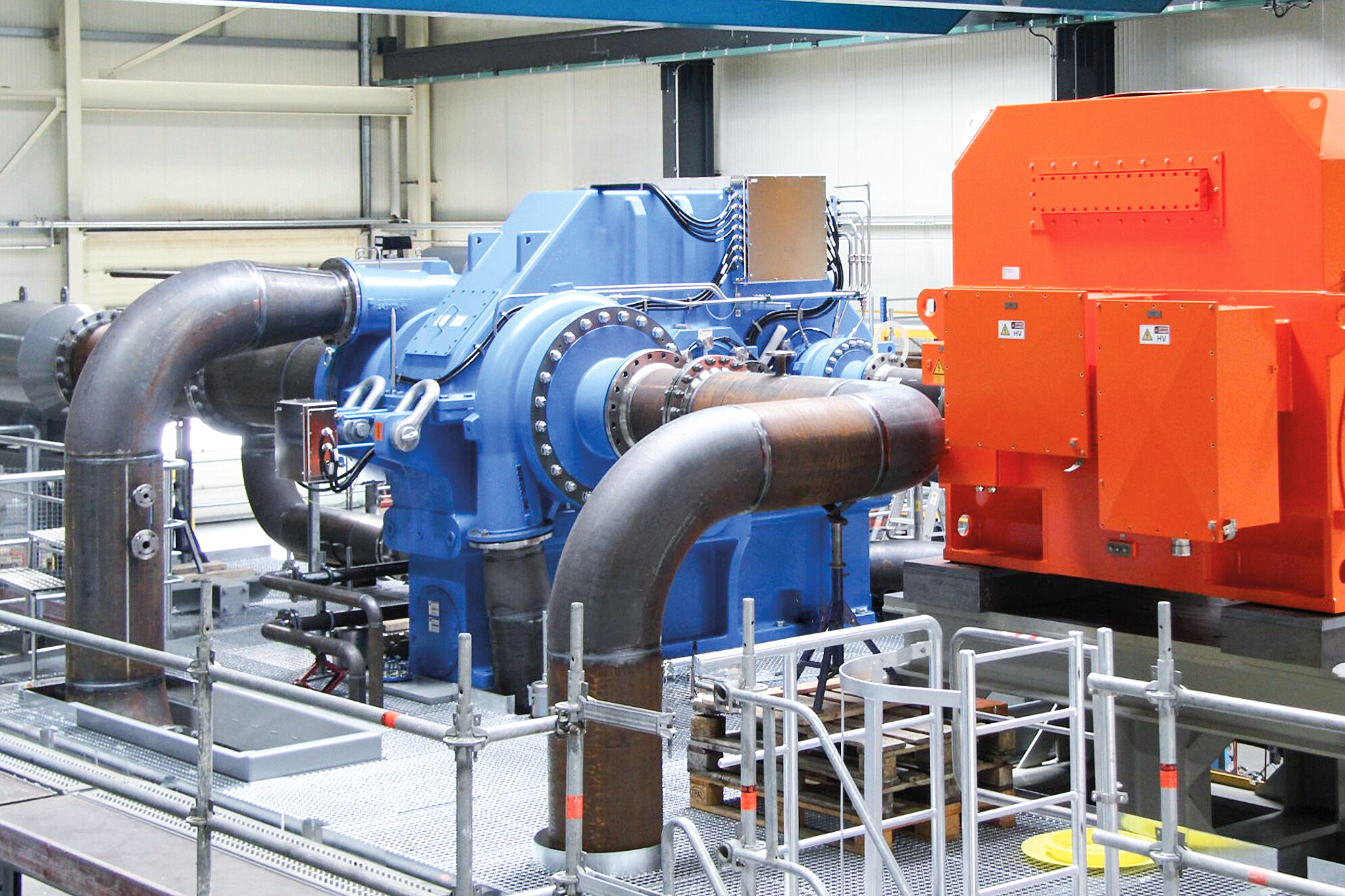
![[Translate to Englisch:] Getriebeturboverdichter für CO2-Verdichtung](/fileadmin/_processed_/9/d/csm_Carbon_capture_6_6f350f37a2.jpg)
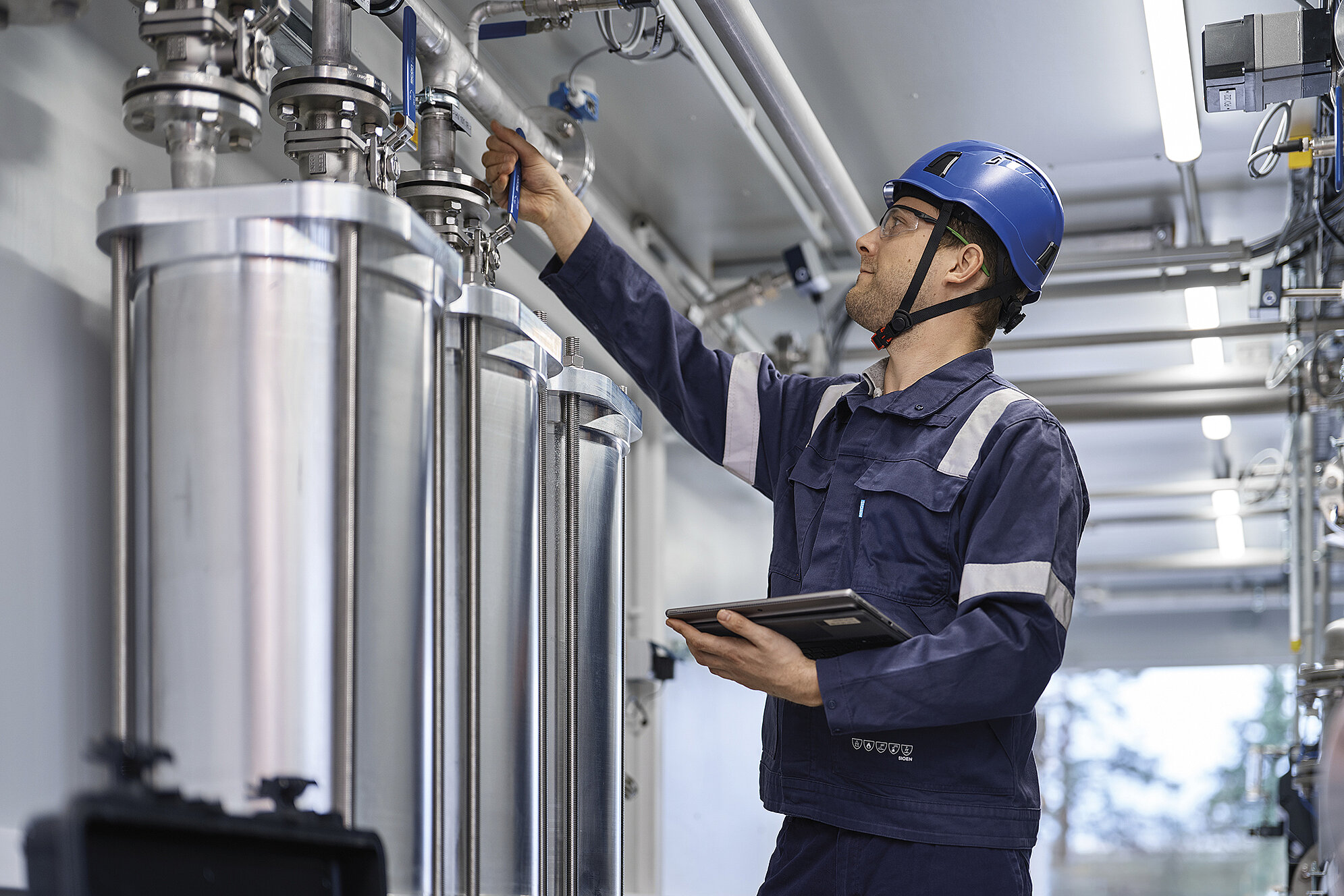
BORSIG offers customised, process-optimised design to meet a wide range of requirements. The focus is on efficient compression and delivery of the CO2 to pipelines, storage, tanks or further processing. Our integrally geared centrifugal compressors stand for low operating and maintenance costs combined with high energy efficiency and flexible control.
BORSIG’s innovative technologies in the field of solvent-resistant polymer membranes offer an energy-, raw material- and cost-efficient alternative to thermal separation processes.

Nanofiltration is an established water treatment process. However, behind Organic Solvent Nanofiltration (OSN) is a completely new, innovative technology with a great deal of potential.
The availability of solvent-resistant polymer membranes now makes it possible to separate liquids that could previously only be separated using conventional
and thermal processes such as distillation or that could not at all be processed economically.
The advantages of OSN: non-thermal separation with reduced raw material and energy input and simplified yet reliable processes. With its in-house developed polymer membranes, BORSIG is among the leading suppliers of this technology.
OSN has opened up a whole host of new possibilities.
One example is the use of OSN membranes in the waste oil recycling process. Waste oils contain numerous components, including the valuable and reusable base oil (60 - 70 %), which offer a high potential in terms of value creation. As the process using OSN membranes is pressure-driven and not thermal, energy consumption and thus the generation of CO2 can be reduced and the waste oil recycled in a cost-efficient manner.
However, the possible applications of OSN extend far beyond this and make OSN attractive for the entire (petro-) chemical industry, the pharmaceutical and life sciences industries and the food sector, among others.
An OSN polymer membrane does not function like a conventional membrane filter with defined pore sizes, as it is closed.
Instead of screening, solution diffusion takes place through the layers of the membrane. In this pressure-driven process, the special properties of the membrane allow certain molecules to pass through the membrane faster than others.
This enables the BORSIG polymer membranes to separate dissolved molecules within the range of 200 to 1000 g/mol.
In close collaboration with its customers, BORSIG develops tailor-made solutions for every application. It is always important for us to understand our customers’ processes as accurately as possible in order to present them with the best possible and most efficient solution. The feasibility is then tested in the laboratory and verified in a pilot test for large-scale use. Our engineering teams then develop the plant in accordance with customer and international standards.
BORSIG also takes care of commissioning (a matter of hours with OSN, by the way) and maintenance (also significantly reduced, due to the durability).
BORSIG therefore not only helps to recover valuable resources and save energy, but also relieves the burden on its customers.
| Name | Usage | Duration |
|---|---|---|
| privacylayer | Status Agreement Cookie hint | 1 year |
| Name | Usage | Duration |
|---|---|---|
| _pk_id | Matomo | 13 months |
| _pk_ref | Matomo | 6 months |
| _pk_ses | Matomo | 30 minutes |
| _pk_cvar | Matomo | 30 minutes |
| _pk_hsr | Matomo | 30 minutes |
| _pk_testcookie | Matomo | End of session |
| Name | Usage |
|---|---|
| youtube | Youtube video embedding |